
 MeshLine
Sitemap, IndexNow, or Wait: Choosing Your Discovery Signal
Compare sitemaps, IndexNow and natural crawling as discovery signals, with a decision framework and verification steps, plus how Meshline fits the workflow.
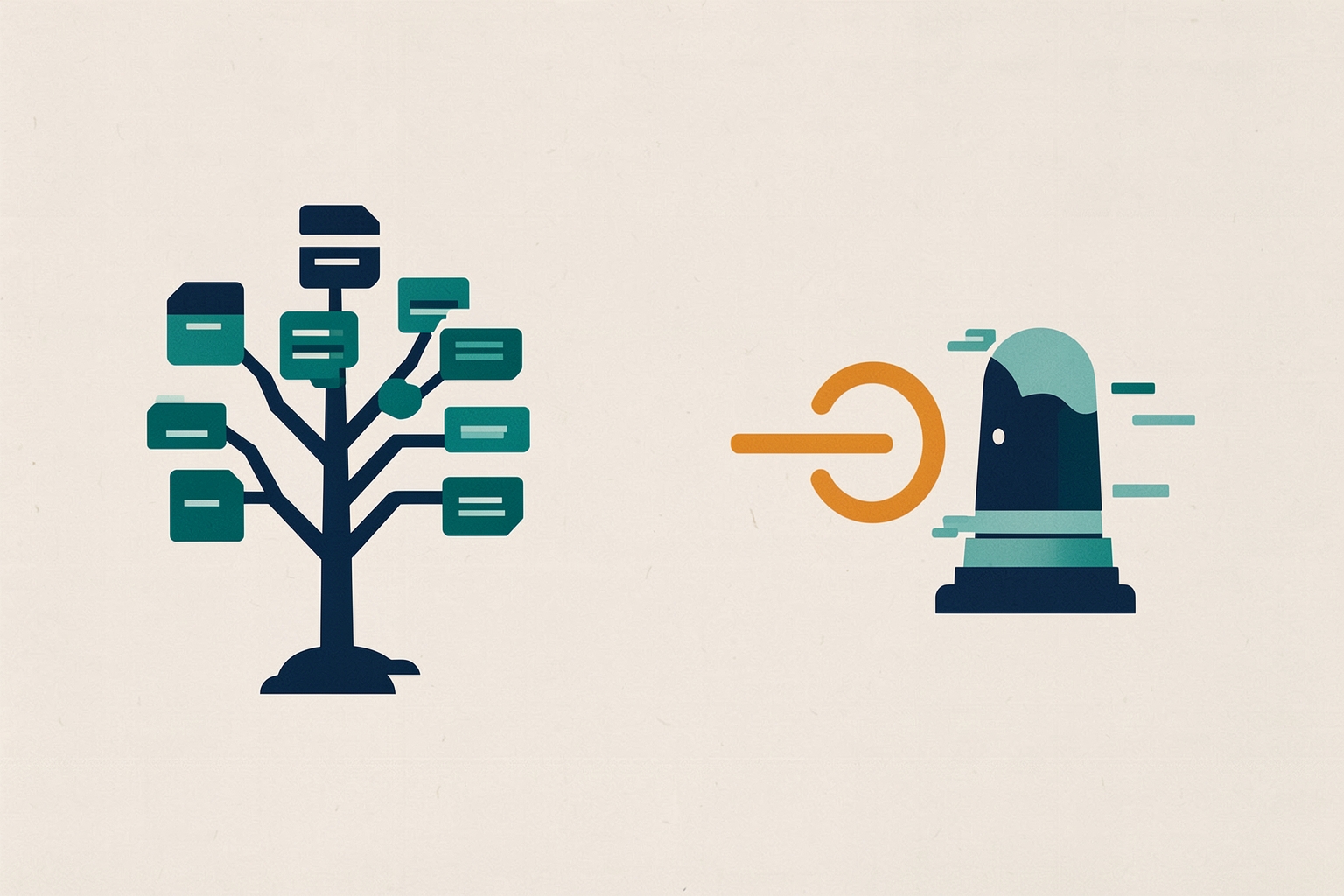
You publish a new article, and nothing happens for days.
The page exists, the sitemap updated, but Google has not picked it up.
The question is which discovery signal to use: a sitemap, IndexNow, or simply waiting for the next crawl.
The honest answer is that each does a different job, and the right choice depends on how often your content changes and which search engines matter to you.
How search engines actually find new pages
Search engines discover pages in a few ways.
They follow links from pages they already know, they read sitemaps you publish, and they receive direct notifications through protocols like IndexNow.
Crawling is the step where a search engine fetches the page; indexing is the step where it decides whether to store and serve it.
Faster discovery speeds up crawling, but indexing still depends on the page's quality and the engine's own scheduling.
That distinction matters for expectations.
A discovery signal tells a search engine a URL exists or changed.
It does not guarantee the page will be indexed quickly, or at all.
Thin, duplicated, or blocked pages can be discovered and still excluded from results.
What a sitemap does and when it helps
A sitemap is a file listing the URLs you want search engines to consider.
Google supports several formats, including XML, RSS or Atom feeds, and a plain text file with one URL per line.
XML is the most versatile because it can carry extra information about images, video, and localized pages.
RSS feeds are often generated automatically by a CMS but only cover recent URLs.
Google does not prefer one format over another, so choose what your setup can maintain reliably.
Submitting a sitemap through Search Console is optional.
Google can find your pages without it.
But Google's own guidance says submitting a sitemap through the tool might speed up discovery, and it gives you a report to monitor how the sitemap is processed.
For a marketing site publishing new articles regularly, that monitoring alone is usually worth the setup.
A few sitemap practices prevent silent failures:
- Use fully qualified, absolute URLs, not relative paths.
- List canonical URLs only, one version per piece of content.
- Keep each sitemap under the 50,000 URL and 50 MB limits, and split larger sites into multiple files with a sitemap index.
- Only include a lastmod value when it is consistently and verifiably accurate; Google ignores priority and changefreq values.
- Host the sitemap at the site root if you are not submitting it through Search Console, because a sitemap otherwise only affects URLs under its parent directory.
The lastmod field deserves special attention.
Many CMS plugins stamp every URL with the build date, which makes lastmod meaningless.
Google uses the value only when it reliably reflects real page changes.
If your pipeline cannot produce accurate timestamps, omitting lastmod is better than sending noise.
What IndexNow does and when it helps
IndexNow is a free, open-source protocol that lets you notify participating search engines the moment a URL is added, updated, or removed.
Instead of waiting for a crawler to revisit your site, you ping the engines directly through a simple API or a CMS plugin.
Bing is the most prominent participant, and several content management systems and CDNs offer built-in support.
The practical benefit is timeliness for engines that participate.
If your audience searches on Bing or on engines that consume IndexNow notifications, pinging at publish time can shorten the gap between publishing and discovery.
It also reduces exploratory crawling, which lowers server load.
The limitation is coverage.
IndexNow is not a Google submission channel.
For Google, your discovery signals remain links, sitemaps, and the URL Inspection tool's request-a-crawl option for individual pages.
So IndexNow complements a sitemap; it does not replace one.
What waiting for crawling actually means
Doing nothing is a legitimate strategy for many sites.
If your site has established internal linking and a healthy crawl schedule, search engines will find new pages on their own.
This is especially true when pages are linked from prominent places such as your blog index or homepage.
The wait may be hours on a frequently crawled site or considerably longer on a low-traffic one.
Waiting works best when the content is evergreen and a day or two of delay costs nothing.
It works poorly when the content is time-sensitive, such as event pages, pricing changes, or news-adjacent articles.
Being discovered late means the traffic opportunity has already passed.
Choosing between the three signals
Use this decision logic rather than treating the options as rivals:
- Always maintain an accurate sitemap. It is the baseline discovery signal for every search engine that reads sitemaps, and submitting it through Search Console gives you monitoring. This is the one step that pays off regardless of publishing cadence.
- Add IndexNow if your CMS or CDN supports it and Bing-driven traffic matters to you. The setup cost is low, and it covers add, update, and delete events in real time.
- Use Search Console's URL Inspection tool for individual high-priority pages. When a specific page must be discovered promptly, requesting a crawl of that URL is the targeted option.
- Rely on natural crawling for routine updates on sites with strong internal linking, and spend your effort on making new pages easy to reach from existing pages instead.
Notice that the first two are not mutually exclusive.
A sitemap is a standing inventory; IndexNow is a real-time notification.
Sites that publish frequently often run both.
Common mistakes that slow discovery
Before blaming the discovery signal, check for problems that make any signal ineffective:
- New pages with no internal links. A page that exists only in the sitemap, linked from nowhere on the site, is a weak candidate for crawling and indexing. Link new content from your blog index, related articles, or the homepage.
- Stale or inaccurate sitemaps. Redirects, 404s, and non-canonical URLs in your sitemap waste crawl budget and make the sitemap report harder to use as a monitoring tool. Keep the list clean.
- Robots or noindex conflicts. If the page is blocked from crawling or carries a noindex directive, no discovery signal will help.
- Pinging for every trivial edit. IndexNow is meant for meaningful changes. Flooding it with minor tweaks adds noise without benefit.
- Assuming discovery equals indexing. Use Search Console's index coverage and URL inspection reports to see whether pages were actually indexed, not just crawled.
Verifying the result
After publishing, check Search Console rather than guessing.
The URL Inspection tool shows the current index status of a specific page and lets you test the live URL.
The index coverage report shows which pages Google indexed or excluded across the site, and the sitemaps report shows how your submitted sitemap is being processed.
Google's guidance suggests checking the account around once a month, or when you make significant site changes, rather than daily.
For Bing-side visibility, Bing Webmaster Tools is the natural place to check index status on that engine.
What this means for your content operation
For a revenue team coordinating marketing and sales, the discovery layer is plumbing: it should be set up once, monitored lightly, and never be the reason a campaign underperforms.
The higher-leverage work is deciding which content deserves fast discovery in the first place.
Pages tied to active pipeline conversations, product launches, or seasonal demand justify the extra steps; routine blog posts usually do not.
If you are building a content engine, it helps to think of discovery signals as one part of a broader system.
For how clustered content earns visibility faster than isolated posts, see how to use content clusters to rank faster.
The short version
Discovery signals get your pages found.
What happens after that depends on the page itself, and no protocol can substitute for content that deserves the crawl.
Set the plumbing once, monitor it monthly, and put your team's attention back on the content and the pipeline it is meant to support.
Source references: developers.google.com; developers.google.com; www.bing.com.
How Meshline can help. Connect automation, Organic Marketing (demand generation), and customer lifecycle management (Revenue Intelligence).
Bring topic planning, content publishing and performance feedback into the conversation about your workflow. Book a Meshline demo.